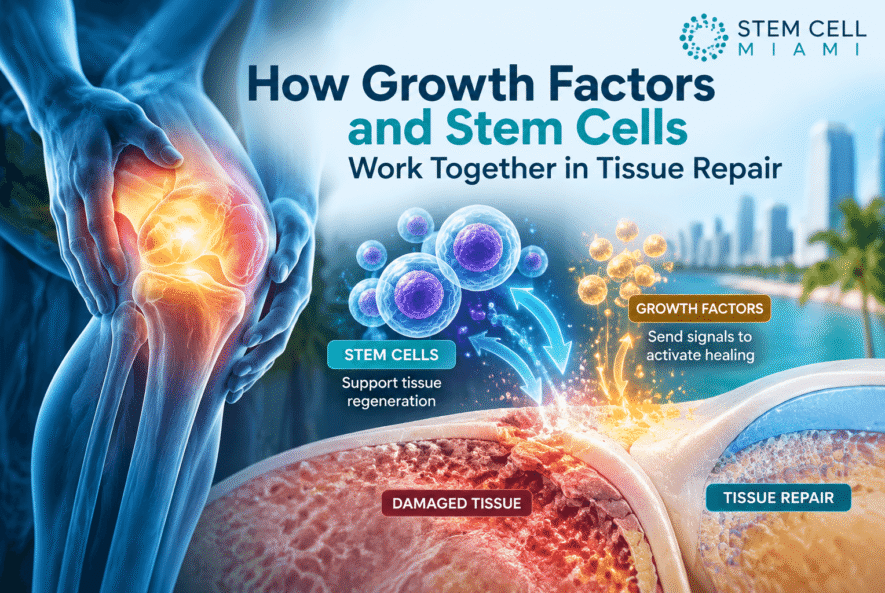
Stem cells and growth factors work together as important components of tissue regeneration. While stem cells provide the potential to develop into specialized cells, growth factors act as biological signals that help guide healing, support cell activity, and promote tissue repair.
At Stem Cell Miami, regenerative medicine approaches focus on understanding how these biological processes may support recovery from various musculoskeletal conditions and injuries.
What Are Growth Factors?
Growth factors are naturally occurring proteins found throughout the body that help regulate important biological processes. They act as communication signals between cells and play a role in processes such as:
- Cell growth and development
- Tissue repair
- Formation of new blood vessels
- Collagen production
- Inflammation regulation
- Cell movement and regeneration
When tissue becomes damaged, growth factors are released as part of the body’s natural healing response. These signals help attract repair cells to the injured area and support the rebuilding process.
What Are Stem Cells?
Stem cells are unique cells with the ability to develop into different types of specialized cells. Unlike mature cells that perform specific functions, stem cells have regenerative potential and can contribute to tissue maintenance and repair.
In regenerative medicine, one commonly discussed type of stem cell is the mesenchymal stem cell (MSC). These cells are studied because of their ability to interact with surrounding tissues and release signaling molecules that may support the body’s repair environment.
Learn more about regenerative treatments through our
regenerative medicine services.
How Do Stem Cells and Growth Factors Work Together?
Stem cells and growth factors have different but complementary roles in the healing process. Think of stem cells as the building resources and growth factors as the instructions that help organize the repair process.
1. Growth Factors Send Signals to Start Repair
After an injury occurs, the body releases growth factors that communicate with nearby cells. These signals help coordinate the repair response by attracting regenerative cells and encouraging tissue rebuilding.
2. Stem Cells Respond to Biological Signals
Stem cells can respond to signals from their environment. Growth factors help create conditions that support stem cell activity and interaction with damaged tissues.
3. Supporting New Tissue Formation
During tissue repair, growth factors may help regulate processes involved in creating new structural components such as collagen and connective tissue. Stem cells may contribute by supporting the development of specialized cells involved in maintaining healthy tissue.
The Role of Growth Factors in Tissue Regeneration
Growth factors are involved in several important stages of tissue healing, including:
Cell Communication
Cells need communication signals to coordinate repair. Growth factors help deliver messages that influence cell behavior during healing.
Blood Vessel Formation
Some growth factors support angiogenesis, which is the development of new blood vessels. Healthy blood supply is important because tissues require oxygen and nutrients during recovery.
Collagen and Connective Tissue Support
Collagen provides structure and strength to many tissues, including tendons, ligaments, and skin. Growth factors participate in processes involved in collagen production and remodeling.
Why Are Stem Cells Studied in Regenerative Medicine?
Researchers continue studying stem cells because of their unique biological properties. Unlike traditional approaches that mainly focus on managing symptoms, regenerative medicine explores ways to support the body’s natural healing mechanisms.
Stem cell research has been investigated for various conditions involving:
- Joint discomfort
- Cartilage damage
- Tendon injuries
- Sports-related injuries
- Musculoskeletal conditions
Growth Factors vs Stem Cells: What Is the Difference?
| Stem Cells | Growth Factors |
|---|---|
| Living cells with regenerative potential | Protein signals that communicate between cells |
| May support tissue development | Help regulate repair activities |
| Interact with the surrounding environment | Provide instructions for cellular behavior |
| Studied in regenerative medicine research | Important part of natural healing processes |
Can Growth Factors Improve the Regenerative Environment?
The healing environment around damaged tissue plays an important role in recovery. Growth factors help regulate communication between cells, while stem cells interact with this environment to support repair mechanisms.
Researchers continue investigating how these biological components may work together to improve regenerative approaches for different conditions.
Conditions Where Regenerative Medicine Is Being Studied
Regenerative medicine research involving stem cells and growth factors has explored applications related to:
- Knee and joint conditions
- Osteoarthritis
- Sports injuries
- Tendon and ligament injuries
- Musculoskeletal pain
If you are exploring options for joint or injury-related concerns, you can learn more about our
joint pain treatment options.
What Does the Future of Stem Cells and Growth Factors Look Like?
Regenerative medicine continues to evolve as scientists learn more about cellular communication, tissue engineering, and biological repair mechanisms.
Future research may provide additional understanding of how stem cells, growth factors, and other biological therapies can be used together to support tissue regeneration.
Frequently Asked Questions About Growth Factors and Stem Cells
Do stem cells and growth factors work the same way?
No. Stem cells are living cells with regenerative properties, while growth factors are signaling proteins that help regulate cellular activity and repair processes.
Why are growth factors important in tissue healing?
Growth factors help cells communicate during healing and support processes involved in tissue repair and regeneration.
Are stem cells naturally found in the human body?
Yes. Stem cells exist naturally in the body and contribute to tissue maintenance and repair throughout life.
Is regenerative medicine available in Miami?
Yes. Patients interested in regenerative approaches can consult with qualified healthcare providers to discuss available options.
Conclusion
Growth factors and stem cells represent two important areas of regenerative medicine research. Growth factors help coordinate cellular communication, while stem cells provide regenerative potential that may support tissue repair.
As research continues, understanding how these biological components interact may help advance future approaches for supporting recovery and tissue health.
Interested in learning more about regenerative medicine options?
Schedule a consultation with Stem Cell Miami today.