In June 2026, Stanford Medicine researchers published a study in the journal Science showing that blocking a single aging-related protein called 15-PGDH restored lost cartilage in the knee joints of aging mice, prevented arthritis after joint injuries, and triggered new cartilage growth in human knee tissue samples taken during joint replacement surgery. It’s a genuinely exciting discovery — but it’s still in the research stage, tested in mice and lab tissue, not yet available as a treatment for patients. For people dealing with joint pain and early-to-moderate arthritis today, regenerative treatments like PRP and stem cell therapy remain the most established non-surgical options available right now.
What Did the Stanford Study Actually Find?
Osteoarthritis affects roughly one in five adults in the United States, and until now, there has been no drug capable of reversing cartilage loss — only ways to manage pain or ultimately replace the joint surgically. The Stanford team, led by Dr. Helen Blau and Dr. Nidhi Bhutani, set out to change that.
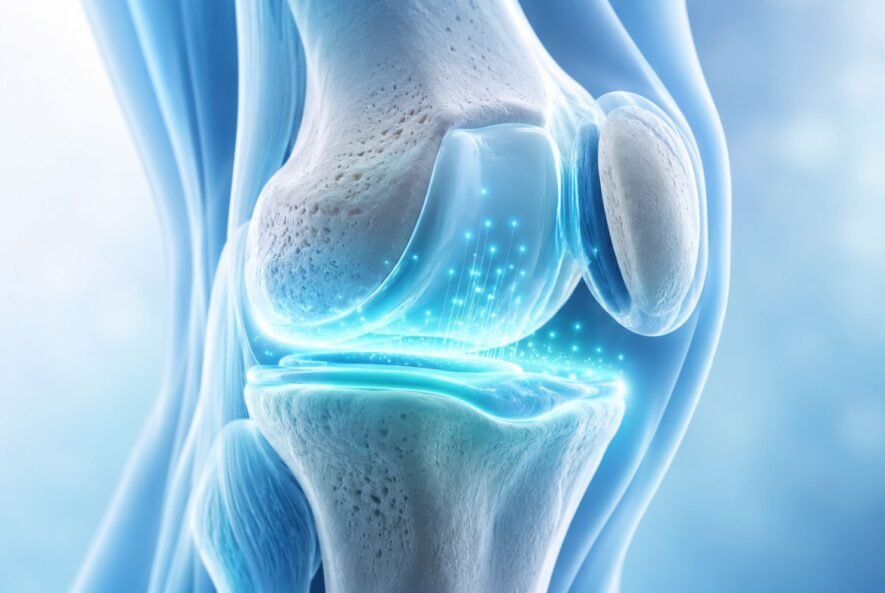
Their research focused on a protein called 15-PGDH, part of a class of proteins the same team nicknamed “gerozymes” back in 2023 — proteins that build up with age and suppress the body’s natural ability to repair tissue. When the researchers blocked 15-PGDH in older mice, something unexpected happened: cartilage that had worn away over the animals’ lifetimes began regenerating. The treatment also prevented arthritis from developing in mice after injuries similar to an ACL tear.
Most notably, when the team applied the same approach to human cartilage samples — tissue removed during knee replacement surgeries because it was too damaged to save — that tissue began forming new, functional cartilage in the lab.
How Does Blocking a Protein Regrow Cartilage?
Blocking 15-PGDH raises levels of a signaling molecule called prostaglandin E2, which appears to prompt the cartilage-producing cells in the joint — called chondrocytes — to shift back into a more youthful, repair-focused state. Interestingly, cartilage seems to regenerate this way without relying on stem cells multiplying, which is how most other tissues in the body regenerate. Instead, the existing chondrocytes already in the joint appear to “wake up” and resume producing cartilage on their own.
Is This Treatment Available for Patients Yet?
Not yet. This is important context that’s often missing from headlines about the study. Here’s where things actually stand:
- The findings are from mouse studies and laboratory human tissue samples — not human clinical trials for cartilage regeneration specifically.
- An oral version of a 15-PGDH inhibitor is currently in Phase 1 clinical trials, but for age-related muscle weakness, not arthritis.
- Researchers have said they hope to move toward human cartilage trials, but that process typically takes years.
In other words, this is a genuinely promising scientific breakthrough — but it’s a preview of where regenerative medicine may be headed, not a treatment you can access today.
What Are Your Options for Joint Pain and Arthritis Right Now?
While research like this continues, several non-surgical regenerative approaches are already available and have years of clinical use behind them:
- PRP (Platelet-Rich Plasma) Therapy — uses concentrated growth factors from your own blood to support tissue healing and reduce inflammation in the joint
- Stem Cell Therapy — uses your body’s own regenerative cells to support tissue repair and manage pain associated with cartilage wear and osteoarthritis
- Ultrasound-guided injections — allow precise, targeted delivery of these therapies directly to the affected joint
These treatments don’t work through the exact same 15-PGDH mechanism the Stanford team studied, but they share the same underlying goal: supporting the body’s own repair processes instead of masking pain or moving straight to surgery.
Frequently Asked Questions
When will the Stanford cartilage treatment be available to patients? There’s no confirmed timeline. The compound is currently in early-phase trials for a different condition (muscle weakness), and cartilage-specific human trials have not yet begun. Treatments like this typically take several years to move from lab research to patient availability, if they succeed at all.
Does this mean current regenerative treatments for arthritis don’t work? No. PRP and stem cell therapy are established, currently available options that many patients use today to manage joint pain and support healing. The Stanford research represents a different, earlier-stage approach that may complement or expand treatment options in the future.
Should I wait for this new treatment instead of starting therapy now? That’s a conversation to have with a physician. Since the Stanford treatment is likely years away from patient availability, most patients with joint pain benefit from discussing currently available options rather than delaying care.
What is osteoarthritis, exactly? Osteoarthritis is the most common form of arthritis, caused by the gradual breakdown of cartilage — the tissue that cushions joints — leading to pain, stiffness, and reduced mobility over time.
Talk to a Physician About Your Joint Pain Options Today
Research like the Stanford study is a reminder of how quickly regenerative medicine is evolving — and it’s part of why physician-led practices stay closely connected to the science behind these treatments. If you’re dealing with joint pain or early arthritis now, you don’t have to wait for a future breakthrough to explore non-surgical options.
Book a Consultation or learn more about treatments available today:
This article is for educational purposes only and does not constitute medical advice. The research discussed here is preliminary and has not been tested in human clinical trials for cartilage regeneration. Treatment suitability is determined after a medical evaluation. Results vary by patient.
Source: Stanford Medicine, published in Science, June 12, 2026.