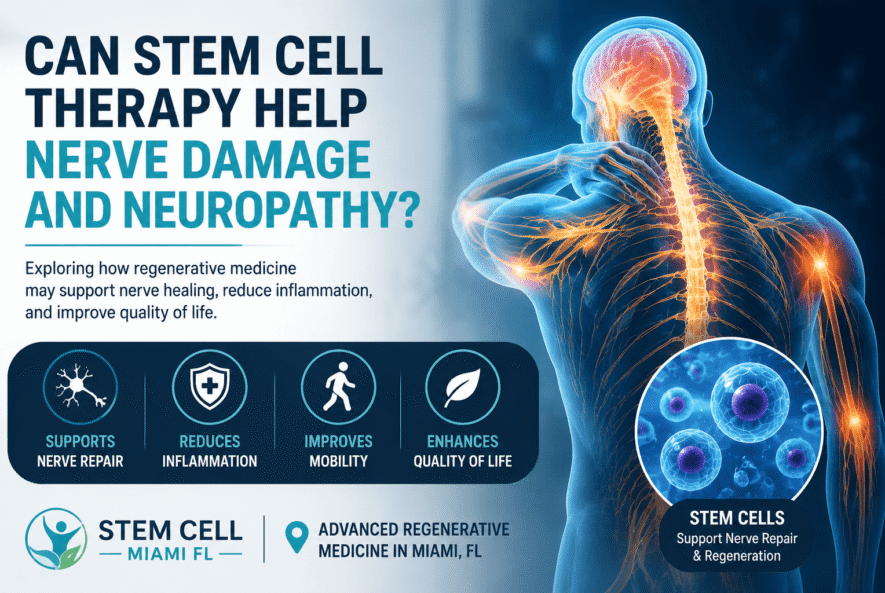
One question that is becoming increasingly common in regenerative medicine is:
Can stem cell therapy help nerve damage and neuropathy?
Stem cell therapy is an emerging area of regenerative medicine that focuses on supporting the body’s natural healing processes. Research continues to explore how stem cells may help reduce inflammation, support nerve health, and improve function in patients with certain types of nerve-related conditions.
At Stem Cell Miami FL, patients receive personalized regenerative medicine evaluations to understand whether advanced therapies may be suitable for their specific condition and health goals.
What Is Neuropathy?
Neuropathy is a condition that occurs when nerves outside the brain and spinal cord become damaged or irritated. These nerves are responsible for sending signals between the brain and different parts of the body.
When nerves become damaged, communication between the body and brain can become disrupted, leading to uncomfortable and sometimes painful symptoms.
Peripheral neuropathy most commonly affects the hands and feet, but it can also impact other areas of the body.
Common Symptoms of Nerve Damage and Neuropathy
Symptoms vary depending on the type and severity of nerve damage. Common signs include:
- Numbness in hands or feet
- Tingling sensations
- Burning nerve pain
- Sharp or electric-like pain
- Muscle weakness
- Loss of balance
- Increased sensitivity to touch
- Reduced ability to feel temperature changes
- Cramping or discomfort
For some patients, neuropathy symptoms develop slowly. For others, nerve pain may appear suddenly and become severe.
What Causes Nerve Damage?
Nerve damage can develop from many different causes. Understanding the underlying cause is important when determining appropriate treatment options.
Common causes of neuropathy include:
- Diabetes and high blood sugar levels
- Autoimmune conditions
- Chemotherapy treatments
- Vitamin deficiencies
- Physical injuries
- Spinal problems
- Infections
- Certain medications
- Alcohol-related nerve damage
Because neuropathy can have different causes, treatment plans must be personalized based on each patient’s condition.
Traditional Treatments for Neuropathy
Traditional neuropathy treatments often focus on controlling symptoms rather than repairing damaged nerves.
Common approaches include:
- Pain medications
- Anti-inflammatory medications
- Nerve pain medications
- Physical therapy
- Lifestyle changes
- Blood sugar management
- Nutritional support
While these treatments may help some patients manage symptoms, they do not always address the underlying nerve damage.
What Is Stem Cell Therapy?
Stem cell therapy is a regenerative medicine treatment designed to support the body’s natural repair mechanisms.
Stem cells are unique because they can release growth factors and signaling molecules that may influence healing, inflammation, and tissue recovery.
Regenerative medicine is being studied for many conditions involving damaged tissues, including:
- Joint injuries
- Cartilage damage
- Sports injuries
- Spinal conditions
- Nerve-related conditions
Learn more about our regenerative treatments:
Stem Cell Therapy
How Stem Cell Therapy May Help Nerve Damage
The potential of stem cell therapy for nerve damage comes from the ability of stem cells to support the body’s healing environment.
Researchers believe stem cells may help nerve-related conditions through several mechanisms:
1. Reducing Inflammation Around Nerves
Chronic inflammation can contribute to nerve irritation and damage. Stem cells may release anti-inflammatory signals that help create a healthier environment for nerve recovery.
2. Supporting Nerve Repair Processes
Research suggests certain stem cells may support the regeneration and repair processes involved in nerve healing.
However, nerve regeneration is complex, and outcomes depend on factors such as the type of nerve damage, severity, and overall health.
3. Improving Tissue Environment
Stem cells may help improve the surrounding tissue environment by releasing growth factors that support cellular communication and repair.
4. Supporting Function and Quality of Life
Some patients exploring regenerative medicine are looking for improvements in:
- Mobility
- Comfort
- Sensation
- Daily function
Can Stem Cell Therapy Regenerate Damaged Nerves?
This is one of the most important questions patients ask.
Research shows that certain stem cells have the potential to support nerve repair mechanisms. In laboratory studies, stem cells have demonstrated the ability to release substances that support nerve growth and healing.
However, complete nerve regeneration is a complicated process. The success of treatment depends on:
- The cause of nerve damage
- How severe the damage is
- How long the condition has existed
- The patient’s overall health
- The specific treatment approach
Stem cell therapy should be viewed as a regenerative support option rather than a guaranteed cure for all types of neuropathy.
What Does Research Say About Stem Cell Therapy for Neuropathy?
Research into stem cell therapy for nerve damage is ongoing. Scientists are studying how different types of stem cells may influence nerve repair, inflammation, and recovery.
Current research has explored potential benefits including:
- Reduced inflammation
- Improved nerve function
- Enhanced tissue repair
- Better symptom management
According to research information available through the
National Center for Biotechnology Information (NCBI)
,
regenerative medicine continues to be an active area of scientific investigation.
Patients should always discuss potential benefits, risks, and realistic expectations with qualified healthcare providers.
Stem Cell Therapy for Diabetic Neuropathy
Diabetic neuropathy is one of the most common forms of nerve damage. It occurs when prolonged high blood sugar levels damage nerves throughout the body.
Symptoms may include:
- Burning feet
- Numbness
- Tingling
- Reduced sensation
- Nerve pain
Researchers are investigating whether regenerative medicine approaches may help support nerve health in diabetic neuropathy patients.
However, controlling blood sugar levels remains an important part of managing diabetic nerve damage.
Stem Cell Therapy vs Traditional Neuropathy Treatments
Traditional Treatments
- Focus mainly on symptom control
- May reduce pain sensations
- Often require ongoing management
- Usually do not repair damaged nerves
Stem Cell Therapy
- Focuses on regenerative support
- May help improve the healing environment
- Targets biological repair processes
- Research continues to evaluate long-term benefits
Who May Be a Candidate for Stem Cell Therapy?
Stem cell therapy may be considered for individuals who:
- Have chronic nerve-related symptoms
- Experience neuropathy that affects daily life
- Want a non-surgical regenerative approach
- Have not achieved desired results from traditional treatments
- Are looking for advanced treatment options
A detailed medical evaluation is necessary to determine whether regenerative medicine is appropriate.
Learn more:
Who Is Not a Candidate for Stem Cell Therapy?
Potential Benefits of Stem Cell Therapy for Nerve Damage
Potential benefits being studied include:
- Support for nerve healing
- Reduced inflammation
- Improved tissue environment
- Better mobility
- Improved quality of life
- Reduced discomfort
Are There Risks or Side Effects?
Like any medical procedure, stem cell therapy may involve potential risks.
Possible side effects may include:
- Temporary soreness
- Injection site discomfort
- Mild swelling
- Temporary inflammation
Learn more:
What Are the Side Effects of Stem Cell Therapy?
Lifestyle Changes That Support Nerve Health
Regenerative treatments work best when combined with healthy lifestyle habits.
- Maintaining healthy blood sugar levels
- Eating a balanced diet
- Regular physical activity
- Managing stress
- Avoiding smoking
- Limiting alcohol consumption
- Getting quality sleep
Other Regenerative Medicine Treatments
Depending on individual needs, regenerative medicine may include additional therapies such as:
Frequently Asked Questions About Stem Cell Therapy and Neuropathy
Can stem cell therapy completely cure neuropathy?
Stem cell therapy is not considered a guaranteed cure for neuropathy. Research suggests it may support nerve health and reduce symptoms in certain patients, but results vary.
How long does stem cell therapy take to work for nerve damage?
Results vary depending on the condition. Some patients may notice changes within weeks, while regenerative improvements may continue developing over several months.
Is stem cell therapy safe for nerve damage?
When performed by qualified medical professionals, stem cell therapy is generally considered well tolerated, but every treatment carries potential risks.
Final Thoughts: Can Stem Cell Therapy Help Nerve Damage and Neuropathy?
Nerve damage and neuropathy can be challenging conditions that affect mobility, comfort, and daily life. While traditional treatments often focus on managing symptoms, regenerative medicine offers a different approach by supporting the body’s natural healing processes.
Current research suggests stem cell therapy may have potential for supporting nerve health, reducing inflammation, and improving function in selected patients. However, outcomes depend on many factors, including the cause and severity of nerve damage.
At
Stem Cell Miami FL
, personalized regenerative medicine consultations help patients understand their options and determine whether stem cell therapy may be suitable for their condition.
If you are exploring regenerative options for nerve damage or neuropathy,
schedule a consultation today
to learn more.