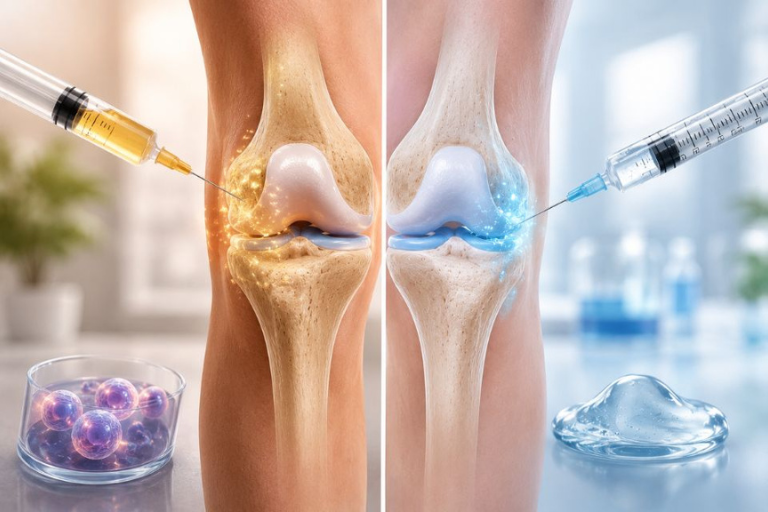
Knee pain and osteoarthritis affect millions of people every year, making simple activities like walking, climbing stairs, exercising, or even standing uncomfortable. As joint degeneration progresses, many patients begin searching for alternatives to surgery that can help relieve pain and improve mobility.
Two commonly discussed non-surgical treatment options are Stem Cell Therapy and Hyaluronic Acid (HA) Injections. While both treatments are used for joint pain and osteoarthritis, they work in very different ways.
Hyaluronic acid injections primarily focus on improving joint lubrication and cushioning, while stem cell therapy aims to support the body’s natural healing and regenerative processes.
If you’re trying to decide between these treatment options, understanding the differences, benefits, limitations, and scientific evidence behind each approach can help you make a more informed decision.
At Stem Cell Miami FL, patients receive personalized regenerative medicine evaluations to determine the most appropriate treatment plan based on their condition, lifestyle, and long-term goals.
What Is Hyaluronic Acid?
Hyaluronic acid is a naturally occurring substance found throughout the body, especially within joints, connective tissues, and skin. In healthy joints, hyaluronic acid helps lubricate the joint and acts as a shock absorber during movement.
As osteoarthritis develops, the concentration and quality of hyaluronic acid inside the joint often decrease. This reduction can contribute to:
- Joint stiffness
- Reduced mobility
- Pain during movement
- Increased friction between bones
- Progressive joint degeneration
Hyaluronic acid injections are designed to supplement the natural lubrication within the joint.
What Are Hyaluronic Acid Injections?
Hyaluronic acid injections, sometimes called viscosupplementation injections, involve injecting a gel-like substance directly into the affected joint, most commonly the knee.
The goal is to improve lubrication and cushioning, helping joints move more comfortably.
Doctors often recommend HA injections for:
- Knee osteoarthritis
- Mild to moderate arthritis
- Joint stiffness
- Reduced mobility
- Patients seeking non-surgical pain relief
Although these injections may improve comfort, they do not regenerate cartilage or repair damaged tissues.
What Is Stem Cell Therapy?
Stem cell therapy is a regenerative medicine treatment designed to support the body’s natural healing processes. Stem cells have unique regenerative properties that may help support tissue repair, reduce inflammation, and improve joint function.
Unlike hyaluronic acid injections, stem cell therapy focuses on addressing the biological environment within the joint rather than simply improving lubrication.
Stem cell therapy is commonly explored for:
- Knee osteoarthritis
- Joint pain
- Cartilage damage
- Sports injuries
- Tendon injuries
- Ligament injuries
- Hip and shoulder arthritis
Learn more about Stem Cell Therapy and regenerative medicine treatments.
How Hyaluronic Acid Injections Work
Hyaluronic acid injections primarily function as a lubricant inside the joint.
Potential benefits include:
- Improved joint lubrication
- Reduced friction
- Enhanced shock absorption
- Temporary pain relief
- Improved joint movement
Many patients begin noticing improvements within several weeks after treatment.
However, the effects are generally temporary and may gradually wear off over time.
How Stem Cell Therapy Works
Stem cell therapy works differently. Rather than acting as a lubricant, stem cells may help create a healing environment within the joint.
Potential regenerative effects include:
- Reducing inflammation
- Supporting tissue repair
- Promoting healing signals
- Enhancing joint function
- Supporting cartilage health
Researchers continue studying how regenerative medicine therapies may influence joint recovery and long-term mobility.
Main Difference Between Stem Cell Therapy and Hyaluronic Acid Injections
| Stem Cell Therapy | Hyaluronic Acid Injections |
|---|---|
| Regenerative medicine approach | Lubrication-based treatment |
| Focuses on healing support | Focuses on cushioning the joint |
| May support tissue repair | Does not repair tissue |
| Addresses biological processes | Provides mechanical support |
| Potential long-term benefits | Temporary symptom relief |
Benefits of Hyaluronic Acid Injections
1. Non-Surgical Treatment
HA injections are minimally invasive and require little downtime.
2. Improved Joint Lubrication
The injected hyaluronic acid may help reduce friction inside the joint.
3. Temporary Pain Relief
Some patients experience reduced pain and improved comfort after treatment.
4. Simple Outpatient Procedure
Most injections can be completed quickly without surgery.
Benefits of Stem Cell Therapy
1. Focus on Regenerative Healing
Stem cell therapy aims to support the body’s natural healing processes rather than simply lubricating the joint.
2. Reduced Inflammation
Inflammation is a major contributor to osteoarthritis symptoms. Stem cells may help regulate inflammatory responses.
3. Improved Mobility
Many patients pursue regenerative medicine because they hope to improve function and movement.
4. Potential Long-Term Support
Stem cell therapy focuses on addressing underlying biological issues that contribute to joint pain.
5. Non-Surgical Alternative
Patients often explore stem cell therapy before considering knee replacement surgery.
Which Treatment Lasts Longer?
One of the biggest differences involves treatment duration.
Hyaluronic acid injections generally provide temporary relief that may last several months depending on the patient and severity of arthritis.
Stem cell therapy aims to support longer-term healing processes. While outcomes vary significantly, regenerative medicine focuses on promoting recovery rather than simply replacing joint fluid.
Stem Cell Therapy for Cartilage Damage
Many patients considering stem cell therapy are concerned about cartilage loss.
Cartilage damage is one of the primary causes of osteoarthritis symptoms.
Researchers continue studying whether stem cell therapy may support cartilage repair and regeneration.
Read our complete guide:
Can Stem Cell Therapy Regrow Cartilage? What the Evidence Actually Says.
Potential Risks of Hyaluronic Acid Injections
Although generally considered safe, possible side effects may include:
- Injection site soreness
- Temporary swelling
- Joint stiffness
- Mild inflammation
- Allergic reactions in rare cases
Potential Risks of Stem Cell Therapy
Stem cell therapy is generally well tolerated when performed by qualified professionals.
Possible side effects may include:
- Temporary soreness
- Mild swelling
- Injection site discomfort
- Short-term inflammation
Learn more by reading:
What Are the Side Effects of Stem Cell Therapy?.
Who May Be a Candidate for Hyaluronic Acid Injections?
HA injections may be appropriate for:
- Mild to moderate knee osteoarthritis
- Patients seeking temporary symptom relief
- Individuals not ready for surgery
- Patients who have not responded to conservative care
Who May Be a Candidate for Stem Cell Therapy?
Stem cell therapy may be considered for:
- Chronic knee pain
- Joint degeneration
- Cartilage damage
- Patients seeking regenerative solutions
- Individuals hoping to delay surgery
Read:
Who Is Not a Candidate for Stem Cell Therapy?.
What Does Current Research Say?
Research on both treatments continues to evolve.
According to studies available through the National Center for Biotechnology Information (NCBI), both hyaluronic acid injections and regenerative medicine therapies may provide benefits for selected patients with osteoarthritis.
However, regenerative medicine remains an active area of investigation as researchers continue evaluating long-term outcomes and healing mechanisms.
Final Verdict: Stem Cell Therapy vs Hyaluronic Acid Injections
Both stem cell therapy and hyaluronic acid injections may help patients suffering from knee osteoarthritis and chronic joint pain, but they serve different purposes.
Hyaluronic acid injections focus primarily on improving joint lubrication and providing temporary symptom relief. Stem cell therapy focuses on regenerative healing, inflammation reduction, and supporting the body’s natural repair mechanisms.
The best treatment depends on:
- The severity of joint damage
- Your treatment goals
- Your activity level
- Your overall health
- Your desire for short-term versus long-term solutions
At Stem Cell Miami FL, personalized regenerative medicine consultations help patients understand their options and develop treatment plans tailored to their unique needs.
If you’re exploring alternatives to surgery for knee pain or osteoarthritis, schedule a consultation today to learn more about regenerative medicine solutions.