Degenerative Disc Disease is one of the most common causes of chronic back pain, neck pain, stiffness, and reduced mobility. Many patients dealing with this condition feel frustrated because traditional treatments often focus only on managing symptoms rather than addressing the deeper cause of disc-related pain.
This is why more people are now asking an important question: Can stem cell therapy help degenerative disc disease?
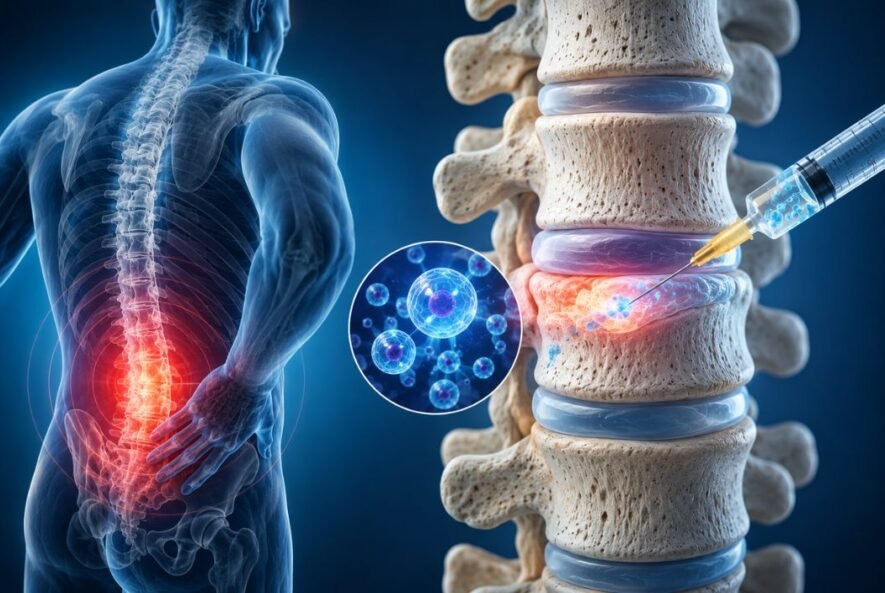
Stem cell therapy is an advanced regenerative medicine treatment that may help support the body’s natural healing process, reduce inflammation, and improve function in certain patients with chronic spine-related conditions. While research is still evolving, regenerative medicine is becoming a promising non-surgical option for people looking for alternatives to repeated pain medications, steroid injections, or surgery.
At Stem Cell Miami FL, patients receive personalized evaluations to determine whether regenerative medicine may be appropriate for their condition, symptoms, and long-term wellness goals.
What Is Degenerative Disc Disease?
Degenerative Disc Disease, often called DDD, is a condition where the spinal discs between the vertebrae gradually lose hydration, flexibility, and strength over time. These discs act like cushions between the bones of the spine, helping absorb shock and allowing smooth movement.
As discs begin to wear down, they may become thinner, less flexible, and less effective at protecting the spine. This can lead to pain, inflammation, nerve irritation, and reduced mobility.
Although the word “disease” sounds serious, degenerative disc disease is often related to natural aging and wear and tear. However, for some patients, it can become painful and life-limiting.
Common Symptoms of Degenerative Disc Disease
Symptoms can vary depending on the location and severity of disc degeneration. Some patients experience mild discomfort, while others deal with chronic pain that affects daily activities.
- Chronic lower back pain
- Neck pain
- Pain that worsens while sitting
- Stiffness in the spine
- Reduced flexibility
- Pain that radiates into the hips, legs, shoulders, or arms
- Numbness or tingling
- Muscle weakness
- Sciatica-like symptoms
- Difficulty standing or walking for long periods
When disc degeneration irritates nearby nerves, symptoms may travel into other parts of the body. For example, lumbar disc degeneration may cause pain down the leg, while cervical disc degeneration may cause pain into the shoulders, arms, or hands.
What Causes Degenerative Disc Disease?
Several factors may contribute to disc degeneration. In many cases, it develops gradually over time due to aging and repeated stress on the spine.
- Natural aging
- Loss of disc hydration
- Previous spine injuries
- Repetitive bending, lifting, or twisting
- Poor posture
- Obesity or excess body weight
- Smoking
- Genetic factors
- Physically demanding jobs
- Sports-related wear and tear
Over time, damaged discs may lose their ability to absorb pressure properly, which can increase stress on joints, ligaments, muscles, and nearby nerves.
Why Degenerative Disc Disease Is Difficult to Treat
Spinal discs have limited blood supply compared to many other tissues in the body. Blood flow is important because it delivers oxygen, nutrients, and healing factors that support tissue repair.
Because spinal discs receive limited circulation, they do not heal as easily as muscles, skin, or other tissues. This is one reason degenerative disc disease can become chronic and difficult to manage.
Traditional treatments often focus on reducing pain and inflammation, but they may not directly support disc repair or regeneration.
Traditional Treatments for Degenerative Disc Disease
Most patients begin with conservative treatment options before considering advanced therapies or surgery.
- Physical therapy
- Stretching and strengthening exercises
- Anti-inflammatory medications
- Pain medications
- Chiropractic care
- Lifestyle changes
- Weight management
- Epidural steroid injections
- Activity modification
In severe cases, doctors may recommend surgical options such as spinal fusion, artificial disc replacement, or decompression surgery. However, surgery may involve longer recovery time, risks, and lifestyle limitations.
This is why many patients explore regenerative medicine as a possible non-surgical alternative.
What Is Stem Cell Therapy?
Stem cell therapy is a regenerative medicine treatment that uses specialized cells to help support the body’s natural repair processes. Stem cells are unique because they can release signaling molecules that may help regulate inflammation, support tissue healing, and improve the local healing environment.
In musculoskeletal and orthopedic care, stem cell therapy is often explored for conditions involving:
- Joint pain
- Arthritis
- Cartilage damage
- Sports injuries
- Tendon injuries
- Ligament injuries
- Back pain
- Degenerative conditions
You can learn more about regenerative treatment options on our Stem Cell Therapy page.
How Stem Cell Therapy May Help Degenerative Disc Disease
Stem cell therapy does not simply “cover up” pain. Instead, it is designed to support the body’s natural healing response by improving the biological environment around damaged or inflamed tissues.
For degenerative disc disease, stem cell therapy may help in several ways.
1. Reducing Inflammation
Inflammation is a major contributor to chronic back pain and disc-related symptoms. Stem cells may release anti-inflammatory signaling molecules that help calm irritated tissues and support a healthier healing response.
2. Supporting Disc Tissue Health
Researchers are studying whether stem cells may help support damaged disc tissue and encourage regenerative activity within the spine.
3. Improving Pain and Function
Some patients may experience improvements in pain, mobility, and quality of life after regenerative medicine treatment.
4. Supporting Natural Healing
Stem cell therapy focuses on helping the body respond more effectively to tissue damage, inflammation, and degeneration.
Can Stem Cells Regenerate Spinal Discs?
This is one of the most important questions patients ask.
In laboratory studies, stem cells have shown the ability to produce molecules that may support disc-like tissue and extracellular matrix formation. This has created strong interest in regenerative medicine for spine conditions.
However, it is important to be realistic. Human spinal discs are complex structures, and complete disc regeneration is not guaranteed. Current research is promising, but more large-scale clinical studies are still needed to fully understand long-term outcomes.
The most accurate answer is that stem cell therapy may help support disc health and symptom improvement in certain patients, but it should not be viewed as a guaranteed cure for degenerative disc disease.
What Does the Research Say?
Research into stem cell therapy for degenerative disc disease is still developing. Some studies have reported improvements in pain, function, disability scores, and quality of life in selected patients.
Researchers are also studying whether regenerative therapies may improve disc hydration, reduce inflammation, and support healthier disc structure.
According to information available through the National Center for Biotechnology Information, regenerative medicine remains an active area of investigation for musculoskeletal and spine-related conditions.
Patients should understand that results vary, and treatment effectiveness depends on several factors including age, severity of disc degeneration, overall health, lifestyle, and treatment plan.
Stem Cell Therapy vs Steroid Injections for Degenerative Disc Disease
Many patients with degenerative disc disease are offered steroid injections for back pain. While steroid injections may reduce inflammation temporarily, they do not repair damaged discs.
Steroid Injections
- May provide fast pain relief
- Reduce inflammation temporarily
- Do not regenerate disc tissue
- May require repeated treatments
- Relief may wear off over time
Stem Cell Therapy
- Focuses on regenerative healing support
- May reduce inflammation naturally
- Supports tissue repair processes
- Aims for longer-term improvement
- Works with the body’s healing response
You can also read our detailed comparison on Stem Cell Therapy vs Cortisone Injections.
Stem Cell Therapy vs Surgery for Degenerative Disc Disease
Surgery may be necessary for severe spinal instability, nerve compression, or advanced structural damage. However, many patients prefer to explore non-surgical options first.
Stem cell therapy may appeal to patients who want:
- Minimally invasive care
- Less downtime than surgery
- Natural healing support
- Reduced reliance on pain medication
- A possible way to delay surgery
However, stem cell therapy is not appropriate for every spinal condition. A proper medical evaluation is necessary to determine whether regenerative medicine is a safe and reasonable option.
Who May Be a Candidate for Stem Cell Therapy for Degenerative Disc Disease?
Stem cell therapy may be considered for patients with early to moderate degenerative disc disease who are looking for non-surgical treatment options.
Potential candidates may include:
- Patients with chronic lower back pain
- Patients with neck pain related to disc degeneration
- Individuals with mild to moderate disc degeneration
- Patients who want to avoid or delay surgery
- Active adults who want to improve mobility
- People who have not improved with conservative care
Not every patient qualifies. Learn more in our guide: Who Is Not a Candidate for Stem Cell Therapy?
Who May Not Be a Good Candidate?
Some patients may not be ideal candidates for stem cell therapy depending on their medical history and condition severity.
- Patients with severe spinal instability
- Patients with advanced nerve compression requiring urgent surgery
- Individuals with active infections
- Patients with active cancer
- Patients with certain immune disorders
- People with severe uncontrolled medical conditions
- Patients expecting guaranteed or instant results
A detailed consultation helps determine whether regenerative medicine is appropriate.
What to Expect During a Consultation
Before stem cell therapy is recommended, a provider will typically review your medical history, symptoms, imaging results, lifestyle, and treatment goals.
Your evaluation may include:
- Review of MRI or X-ray findings
- Discussion of pain patterns
- Physical examination
- Review of previous treatments
- Assessment of mobility and function
- Discussion of risks and expectations
This personalized evaluation helps create a safer and more effective treatment plan.
Recovery After Stem Cell Therapy for Disc Degeneration
Recovery after stem cell therapy varies from patient to patient. Some patients may experience temporary soreness or stiffness after treatment.
Possible short-term effects include:
- Mild soreness
- Injection site discomfort
- Temporary inflammation
- Stiffness for a few days
Since regenerative medicine works gradually, improvements may develop over weeks or months rather than immediately.
You can learn more about treatment safety in our blog: What Are the Side Effects of Stem Cell Therapy?
Lifestyle Habits That Support Spine Health
Stem cell therapy works best when combined with healthy habits that support healing and reduce strain on the spine.
- Maintain healthy body weight
- Stay physically active with low-impact exercise
- Improve posture
- Strengthen core muscles
- Avoid smoking
- Stay hydrated
- Follow physical therapy recommendations
- Use proper lifting techniques
Good lifestyle habits can improve long-term spine function and help protect against further degeneration.
Other Regenerative Medicine Options for Back Pain
Stem cell therapy may be part of a broader regenerative medicine plan. Depending on the patient’s condition, other therapies may also be considered.
- PRP Therapy
- Exosome Therapy
- Hyperbaric Oxygen Therapy
- Physical rehabilitation
- Anti-inflammatory wellness programs
Final Thoughts: Can Stem Cell Therapy Help Degenerative Disc Disease?
Degenerative Disc Disease can cause chronic back pain, stiffness, nerve irritation, and reduced mobility. While traditional treatments often focus on symptom control, stem cell therapy offers a regenerative approach that may help support healing, reduce inflammation, and improve function in selected patients.
Current research is promising, but it is important to understand that stem cell therapy is not a guaranteed cure and results can vary. The best outcomes often depend on proper patient selection, condition severity, lifestyle habits, and an individualized treatment plan.
At Stem Cell Miami FL, personalized regenerative medicine evaluations help patients understand whether stem cell therapy may be a suitable option for degenerative disc disease, chronic back pain, and spine-related conditions.
If you are looking for a non-surgical option for chronic back pain, schedule a consultation today to learn more about your regenerative medicine treatment options.